A window that looks right on a showroom wall can feel completely wrong once it is installed above a kitchen sink, beside a bed, or in a tight bathroom. The choice between awning vs casement windows comes down to more than appearance. It affects how you ventilate your home, how easily you use the window, where it can be installed, and how well it performs through changing GTA weather.
Both styles are hinged, operable windows that can deliver excellent energy efficiency when they are custom fitted and professionally installed. The better choice depends on the room, the wall space, your exterior clearance, and how you live in your home.
Awning vs Casement Windows at a Glance
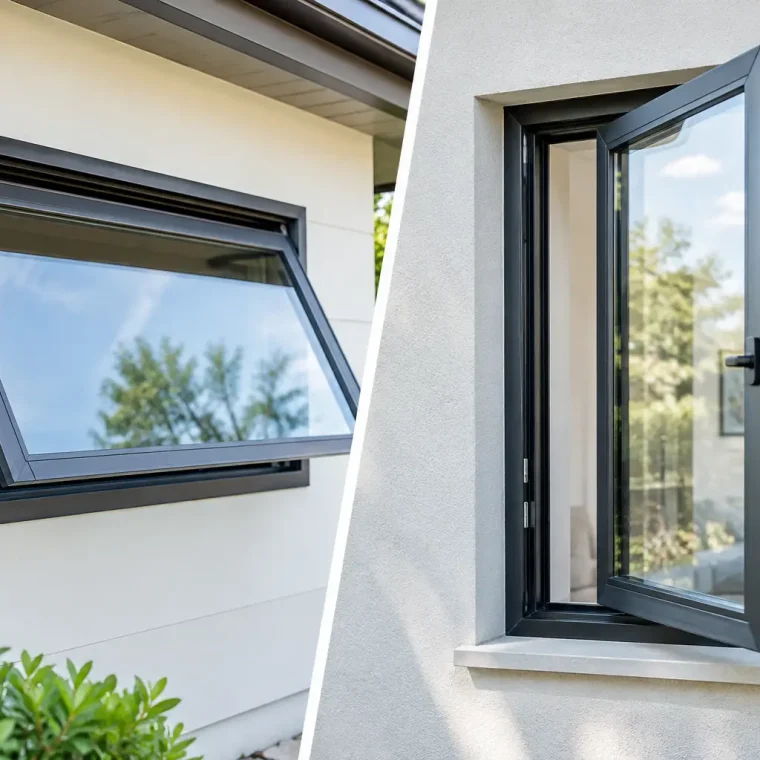
An awning window is hinged at the top and opens outward from the bottom. When open, the sash creates a small roof-like cover over the opening. A casement window is hinged on one side and swings outward like a door, usually operated with a crank handle.
That simple difference changes the experience of the window. Awning windows are often selected for bathrooms, basements, laundry rooms, and other spaces where privacy and ventilation matter more than a wide-open view. Casement windows are a popular choice for bedrooms, living rooms, kitchens, and dining areas because they provide broad views and strong directional airflow.
Neither style is automatically better. A well-designed replacement window should fit the room first, then support your goals for comfort, curb appeal, and long-term value.
Ventilation: Where Casement Windows Have an Edge
If maximum fresh air is your priority, casement windows usually provide more ventilation. Because the entire sash swings outward, a casement window can open wide and expose most of the window opening. The open sash can also catch a side breeze and direct it into the home, which is useful on walls that do not face the prevailing wind.
This makes casement windows especially practical in bedrooms and main living spaces. They can help clear cooking odors from a nearby kitchen, bring in a cross-breeze on mild days, and make a room feel less closed in without relying on air conditioning.
Awning windows open less widely, but they offer a meaningful advantage when the weather turns. Their top-hinged design helps shield the opening from light rain, allowing you to keep the window cracked open when a passing shower would force most other window styles shut. For a bathroom that needs everyday moisture control or a basement that feels stale, that flexibility can be valuable.
The trade-off is straightforward: choose casement windows for the greatest possible airflow, or awning windows for controlled ventilation that is more forgiving in wet weather.
Energy Efficiency and Weather Protection
For homeowners replacing drafty older windows, both styles can be high-performing options. Unlike sliding windows, awning and casement windows close by pressing the sash firmly against the frame. This compression-style seal can limit air leakage when the window is properly manufactured, fitted, and locked.
The glass package matters just as much as the operating style. Insulated glass units, low-emissivity coatings, quality weatherstripping, and an appropriate frame all contribute to year-round comfort. For many homes in the Greater Toronto Area, triple-pane glass can be worth considering in exposed rooms, large openings, or areas that feel cold near the glass during winter.
A window is only as dependable as its installation. Even a premium unit can underperform if gaps around the frame are not properly sealed or if the opening is not prepared correctly. A professional measurement and installation process helps protect against drafts, moisture issues, difficult operation, and avoidable heat loss.
Ease of Use in Everyday Rooms
Casement windows are generally easy to operate with a crank, which makes them a practical option over counters or furniture. A homeowner can turn the handle without leaning over a sink or reaching around a countertop. Many casement designs also allow the screen to remain on the inside, where it is easier to remove for cleaning.
Awning windows use a similar crank mechanism, but their compact upward-opening sash makes them especially useful where a larger outward swing would be inconvenient. They work well high on a wall, above a bathtub, or as a second row of windows above a larger fixed picture window.
Exterior clearance deserves careful attention. A casement sash swings sideways and may extend farther into a walkway, patio area, or landscaping bed. An awning sash projects outward and upward from the bottom, which can also affect exterior space, but it usually requires less side clearance. Neither option should be placed where an open sash could create a hazard near a busy path or interfere with exterior features.
Security Considerations
Modern awning and casement windows can both offer strong security when equipped with quality locking hardware and installed correctly. Their crank-operated design is typically more secure than a partially open sliding window because the sash closes tightly into the frame.
Casement windows often use multi-point locking systems that secure the sash at more than one location. This helps create a tight seal and can make forced entry more difficult. Awning windows may also include secure locking hardware, although the specific features vary by size, configuration, and manufacturer.
For ground-floor bedrooms or accessible windows, it is wise to discuss egress requirements before choosing a style. A window that looks generous from inside may not provide the required clear opening for emergency escape. This is particularly important in basement renovations, where an awning window may not be suitable unless its opening dimensions meet local code requirements.
Style, Sightlines, and Curb Appeal
Casement windows have a classic, balanced appearance that suits many home styles, from traditional brick homes to clean-lined contemporary renovations. They are available as single units, paired units, and combinations with fixed center panels. A wide casement arrangement can create an impressive view while still allowing operable sections on each side.
Awning windows tend to have a lower, wider profile. They are often used on their own in smaller openings or stacked above or below fixed windows. This makes them a smart design tool when you want daylight and ventilation without sacrificing privacy. In a bathroom, for example, an awning window placed higher on the wall can bring in natural light while limiting sightlines from outside.
Frame color, grille patterns, interior finishes, and glass options can all change the final look. The goal is not to choose the trendiest window. It is to select a configuration that belongs on your home and will still feel right years from now.
When an Awning Window Is the Better Choice
An awning window is often the practical choice when you need ventilation in a compact, private, or weather-exposed location. It is particularly well suited to bathrooms, basement spaces, laundry rooms, and high wall openings. It also works beautifully above a fixed picture window, where the fixed glass provides the view and the awning section provides fresh air.
Choose this style if keeping the window open during light rain is a major benefit, or if the room does not need the full opening width offered by a casement window. Just confirm that the exterior projection will not interfere with a walkway, deck, or landscaping.
When a Casement Window Is the Better Choice
A casement window is usually the stronger option for rooms where airflow, views, and a wide opening matter most. It is a natural fit for bedrooms, kitchens, living rooms, and areas where you want to capture breezes. It is also useful over a kitchen sink, where the crank handle makes operation easier than a double-hung or sliding window.
Choose casement windows when your home has enough exterior clearance for the outward swing and when you want a clean, tall window profile with excellent ventilation potential. In paired configurations, they can add symmetry and substantial curb appeal to the front of a home.
Make the Decision Around Your Home, Not a Catalog
The right window should solve a specific problem. If a bathroom stays humid, an awning window may provide the ventilation you need without giving up privacy. If a bedroom feels stuffy or a living room lacks airflow, a casement window may make a bigger day-to-day difference. In some homes, the best answer is both styles, selected room by room.
At WELDA Windows & Doors, the decision starts with a close look at your openings, exterior conditions, energy goals, and design preferences. Custom sizing, efficient glass options, professional installation, and dependable warranty protection matter because replacement windows are expected to perform for decades.
Before choosing, stand in each room and consider how you want it to feel on a cool spring morning, during a summer rain, and on the coldest winter night. That practical view usually makes the right window style clear.
About the Author