A patio door can look perfectly fine and still be one of the biggest sources of heat loss in your home. If you feel cold air near the glass, see curtains move on windy days, or notice higher heating bills, learning how to insulate patio doors starts with finding where the air is getting through. The right fix may be as simple as new weatherstripping, or it may reveal that an aging door has reached the end of its useful life.
Start by Finding the Source of the Draft
Before adding insulation, inspect the door on a cold or windy day. Stand inside and slowly move your hand around the frame, where the operating panel meets the fixed panel, and along the bottom track. You may feel a noticeable temperature change even when a direct draft is difficult to detect.
Look for daylight around the frame, cracked caulking, flattened weatherstripping, loose handles, or a door panel that does not close squarely. Sliding patio doors often develop gaps when rollers wear down and the panel drops slightly out of alignment. Hinged French or garden doors can lose their seal when hinges sag or the frame shifts.
Condensation is another clue. A little moisture can occur when indoor humidity is high during cold weather, but repeated condensation between glass panes indicates a failed insulated glass unit. Moisture or frost at the edges of the glass may also point to weak seals, poor glass performance, or air leakage around the frame.
How to Insulate Patio Doors With Weatherstripping
Weatherstripping is usually the first repair worth making because it directly seals moving joints. It is affordable, practical, and effective when the door itself is still in good condition.
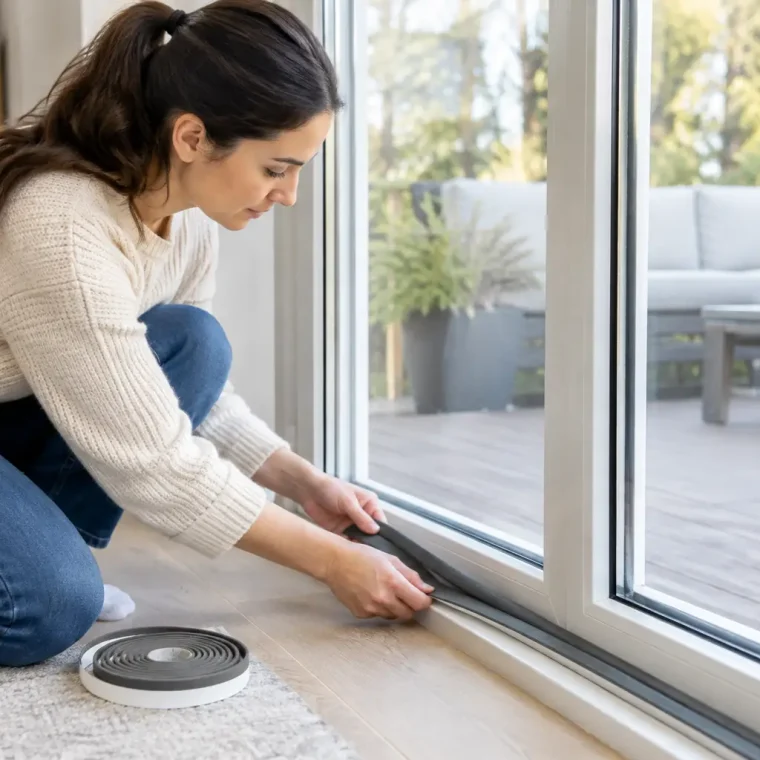
For sliding doors, inspect the pile weatherstripping along the sides and top of the panel. This material can become crushed, torn, or dirty over time. Replace it with the correct size and profile so the door can still slide smoothly while making consistent contact with the frame.
For hinged patio doors, compression weatherstripping around the jamb creates the seal. If it has hardened, cracked, or pulled away from the frame, remove it and install a replacement designed for exterior doors. Avoid using overly thick material as a quick fix. It can make the door difficult to latch, strain the hardware, and create uneven gaps elsewhere.
The key is contact. Once installed, close and lock the door. The weatherstripping should compress evenly all around without forcing the panel out of position. If one corner still has a gap, the problem may be alignment rather than the seal itself.
Do not overlook the bottom of the door
The bottom edge is often where homeowners lose the most heat. A hinged door may need a new door sweep or adjustable threshold. A sliding door needs clean tracks, properly adjusted rollers, and intact bottom seals. Dirt in the track can prevent the panel from closing fully, while worn rollers can leave a gap large enough for cold air to enter.
Clean debris from the track with a vacuum and a soft brush. Then check whether the sliding panel sits level. Many doors have roller adjustment screws near the lower edge of the panel. Small adjustments can improve the seal, but over-adjusting can make the door difficult to operate or cause premature roller wear.
Seal Gaps Around the Patio Door Frame
Air can also enter between the patio door frame and the wall opening. This gap is hidden behind interior trim and exterior casing, so it is easy to miss during a quick inspection.
Outside, examine the perimeter caulking where the frame meets the siding, brick, or exterior cladding. Caulk that is split, shrinking, or pulling away should be removed and replaced with a high-quality exterior-grade product. The goal is to block wind-driven rain and outdoor air without trapping water behind the frame.
Inside, remove a small section of trim only if you are comfortable doing so and can reinstall it cleanly. The space around the rough opening should be insulated with low-expansion window-and-door foam, not standard high-expansion foam. Too much expansion can bow the frame, affect operation, and create a costly repair.
This is one area where professional installation matters. A properly insulated opening needs the correct balance of foam insulation, air sealing, drainage, and exterior flashing. Simply filling every visible gap can create moisture problems if water has nowhere to escape.
Improve Glass Performance Without Replacing the Door
If the frame and seals are sound but the glass feels cold, several temporary upgrades can improve comfort. Cellular shades, insulated drapes, and properly fitted thermal curtains create a buffer between the room and the glass. They work best when they extend beyond the sides of the door and reach close to the floor.
Window insulation film can also reduce drafts around the glass area. It is most useful for older doors with single-pane glass or noticeably weak glazing. The trade-off is appearance and convenience. Film is generally a seasonal solution, and it can make a patio door less practical to use every day.
For a frequently used patio door, consider insulated curtains or cellular shades instead. Open them during sunny winter days to capture solar warmth, then close them at night to reduce heat loss. Keep fabric clear of heaters and ensure it does not interfere with the door lock or emergency exit access.
Adjust the Door Before Assuming It Needs Replacement
A patio door that is difficult to lock, drags on the track, or has uneven gaps may simply need adjustment. This is especially common after years of seasonal expansion, settling, and regular use.
On a sliding door, check the rollers, latch, strike plate, and anti-lift hardware. On a hinged door, inspect hinge screws and the threshold. Tightening hardware or correcting a slight alignment issue may restore a full weather seal.
There is a limit to repairs. A warped panel, rotted frame, recurring water intrusion, severely damaged track, or failed multi-pane glass usually means the door is no longer performing as it should. Replacing weatherstripping every season will not solve a structural or manufacturing problem.
When a New Insulated Patio Door Is the Better Investment
Replacement becomes the smarter choice when repairs are piling up, comfort remains poor, or the door is difficult to operate safely. Modern patio doors are built with tighter weather seals, insulated frames, low-emissivity glass, and multi-pane options that reduce heat transfer far better than older units.
For cold-weather performance, ask about double- and triple-pane insulated glass, low-E coatings, warm-edge spacers, and the overall energy performance of the complete door. Glass matters, but frame construction and professional installation matter just as much. A premium glass package cannot compensate for a poorly sealed opening.
The right door also depends on how you use the space. A large sliding door can bring in natural light and provide easy access to a deck or backyard. Hinged patio doors offer a traditional appearance and a strong perimeter seal, but they need clearance to swing. The best choice balances insulation, operation, security, design, and your home’s layout.
Avoid These Common Patio Door Insulation Mistakes
Do not block drainage holes in a sliding door track. Those openings are designed to move water away from the frame, and sealing them can cause leaks inside the home. Avoid stuffing towels, foam scraps, or rigid materials into the track as a permanent solution. They can trap moisture, damage rollers, and prevent proper operation.
Also, do not apply caulk to moving joints where weatherstripping belongs. Caulk will crack as the door opens and closes, and it can make future repairs more difficult. Finally, never ignore persistent condensation, soft flooring near the threshold, or staining around the trim. Those signs deserve a closer inspection before moisture damages the surrounding wall or subfloor.
For homeowners who want dependable comfort rather than another temporary patch, a patio door assessment can clarify whether a targeted repair or replacement will deliver better value. WELDA Windows & Doors helps GTA homeowners choose custom-fit, energy-efficient doors and professional installation designed to protect comfort through every season. A patio door should be easy to open, secure when locked, and quiet on a cold day – if it is not, that is a practical reason to take action.
About the Author