A front door has to do more than look good from the sidewalk. It needs to handle hard weather, protect your family, reduce drafts, and make the daily arrival home feel better. The most useful door design trends 2026 bring those priorities together: warmer looks, more intentional glass, stronger materials, and details chosen for real-life performance rather than a quick makeover.
For homeowners planning an exterior upgrade, the right trend is not necessarily the boldest one. It is the one that fits the architecture of the house, the exposure of the entryway, and the level of insulation and security the home needs.
Door Design Trends 2026: Warm, Tailored, and Built to Perform
The clean, all-white entry is giving way to more contrast and more texture. That does not mean every home needs a dramatic black door or a bright color. It means homeowners are choosing door systems that look deliberately matched to the home, from the panel design to the sidelites and hardware.
At the same time, appearance is no longer separate from performance. An elegant oversized glass insert can be a poor choice if it leaves a north-facing foyer cold. A dark finish may look striking, but it should be selected with a material and coating designed to stand up to sun exposure. The best 2026 choices balance the visual idea with the conditions at the door.
Deep, grounded colors replace one-note neutrals
Black remains a strong option for contemporary homes, brick facades, and high-contrast trim, but warmer shades are gaining ground. Deep navy, forest green, charcoal brown, muted clay, and rich red are appearing at front entries because they add personality without overwhelming the facade.
Wood-look finishes are also becoming more popular, especially where homeowners want the character of natural grain without the routine maintenance of a traditional wood door. A well-made fiberglass door can offer that look while providing better resistance to moisture, warping, and temperature changes.
Color should work with the fixed elements of the exterior: brick, stone, roofing, soffit, and window frames. If those materials are cool gray, a warm brown or green door can create balance. If the facade already has several colors, a simple black, charcoal, or stained-wood appearance may be the smarter choice.
More glass, used with better judgment
Natural light remains one of the biggest reasons homeowners replace an entry door. Full-length glass, narrow vertical lites, transoms, and sidelites can make a dark hall feel more open before a single interior renovation begins.
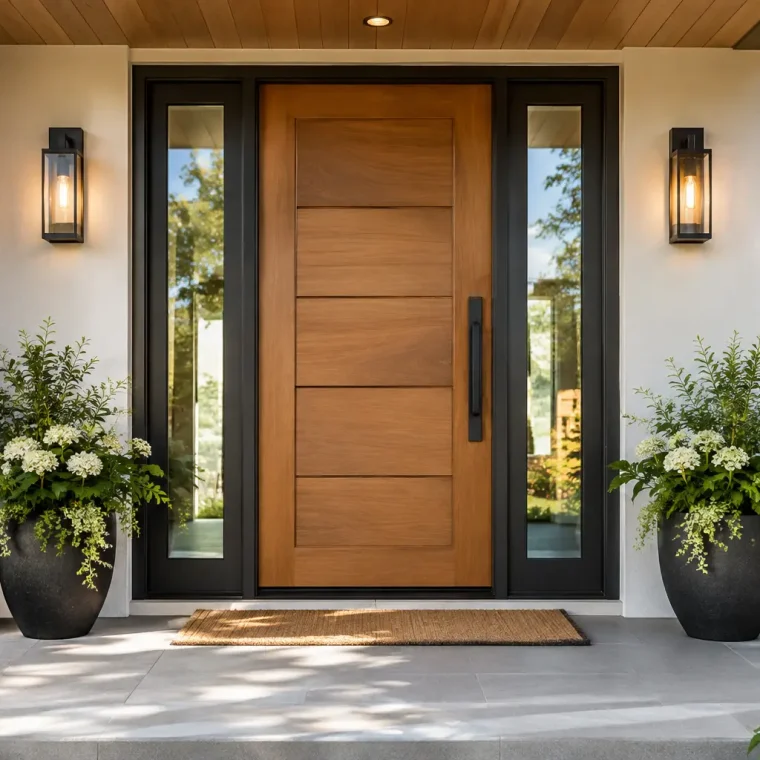
The difference in 2026 is that glass is being used more selectively. Privacy glass, textured glass, internal grilles, and divided-lite patterns give homeowners light without putting the entire front hall on display. Vertical glass panels are especially popular because they complement both modern and traditional homes while keeping the door itself structurally substantial.
For an exposed entry, insulated glass matters. Low-quality glass can contribute to uncomfortable drafts and condensation near the door. Ask about the complete insulated glass unit, not just the style of the insert. The frame, weatherstripping, glass package, and installation all affect how the finished door performs.
Clean lines with architectural character
Modern door designs are still influencing the market, but the look is becoming less stark. Flat panels, simple horizontal grooves, and slim glass lites remain popular, yet homeowners are pairing them with warmer finishes and classic architectural details.
Traditional homes are also moving away from overly ornate doors. Shaker-inspired panels, restrained craftsman detailing, and simple raised-panel designs offer a lasting look that is easier to live with than a highly decorative style. This is a practical direction for resale-minded homeowners: a door should make an entrance feel updated without looking disconnected from the rest of the house.
Performance Is Becoming Part of the Design Decision
A replacement door is a system, not just a slab with a new handle. In climates with cold winters, driving rain, and humid summers, the performance details are often what determine whether the investment feels worthwhile after installation day.
Fiberglass earns its place at the front entry
Fiberglass continues to be a leading choice for homeowners who want a premium appearance with dependable insulation. It can be smooth for a painted contemporary look or textured to resemble wood grain. Unlike wood, it is less likely to swell, rot, or require frequent refinishing when properly manufactured and installed.
Steel doors remain a practical choice for security and value, particularly for secondary entrances, garage entries, and budget-conscious front-door replacements. Modern steel doors can look refined, but they need quality finishing and insulation to avoid becoming a weak point in the home envelope.
There is no single best material for every opening. A covered porch, a fully exposed entry, and a high-traffic side door place different demands on a door. The right recommendation should account for sun, moisture, clearance, traffic, and the homeowner’s preferred level of maintenance.
Larger openings call for smarter configurations
Homeowners are looking more closely at the connection between indoor and outdoor spaces. This is driving interest in wide patio doors, sliding doors with expansive glass, and multi-panel configurations that bring more daylight into kitchens and family rooms.
For a smaller opening, a well-designed sliding patio door can provide excellent function without taking up interior floor space. For a larger renovation, French-style doors or wider multi-panel systems may create a more dramatic transition to a deck or yard. The trade-off is cost, structural planning, and the need for precise installation. Bigger glass areas also make energy-efficient glazing and strong weather seals more important.
Security Details Are More Visible Than Ever
Homeowners want a secure entry, but they do not want it to look industrial. In 2026, security features are being integrated into the door design through stronger frames, multi-point locking options, reinforced strike areas, and better hardware choices.
Matte black hardware remains popular, while satin nickel, aged bronze, and warmer metallic finishes are returning in homes with traditional or transitional styling. The finish is secondary to the quality of the lockset and the installation. A strong deadbolt cannot compensate for a poorly aligned frame or inadequate fastening into the structure of the house.
Smart locks may be a useful upgrade for busy households, allowing keyless entry and easier control of access. Still, homeowners should choose a model that suits their comfort level and confirm that it works properly with the door thickness, handle set, and locking system. Technology should make the entry easier to manage, not add another maintenance problem.
Small Details That Make a Door Look Custom
Many of the strongest exterior upgrades come from careful proportions rather than an expensive statement piece. Matching sidelites to the height and style of the door can make an entry feel more substantial. A transom can add light where headroom allows. Coordinated trim, a clean threshold, and properly sized hardware make the installation look finished rather than pieced together.
For homes with limited curb appeal, a new front door can have an outsized impact when it is paired with updated house numbers, lighting, and a maintained porch or stoop. These details do not need to match perfectly, but they should feel intentional. A modern door beside dated brass lighting, for example, can make both elements look less convincing.
Do not overlook the interior view. You will see the inside of the front door every day, often from the foyer or living room. The interior finish, glass privacy level, and swing direction should support how the home functions, not only how it photographs from outside.
How to Choose a Trend That Will Last
Trends are useful when they help narrow choices, not when they pressure homeowners into replacing a door that suits the house with something temporary. Start with the architectural style, then identify the performance issue you want to solve. Is the current door drafty? Is the foyer too dark? Is security a concern? Is the patio opening difficult to use?
Next, think about exposure and daily use. A fully glazed door may be ideal under a covered entry but need additional privacy treatment on a busy street. A dark door may suit a shaded facade but require a more heat-resistant finish in direct afternoon sun. The right design comes from these practical decisions.
Finally, insist on professional measurement and installation. Even a high-quality door can leak air, stick, or operate poorly if the opening is not prepared correctly. A custom-fit system, installed with attention to insulation, flashing, shimming, and adjustment, protects the comfort and value you expect from the project.
WELDA Windows & Doors helps homeowners make those decisions with custom options, professional installation, and long-term protection built around the finished product. A well-chosen door should give you a stronger first impression today and a more comfortable home every time the weather changes.
About the Author